
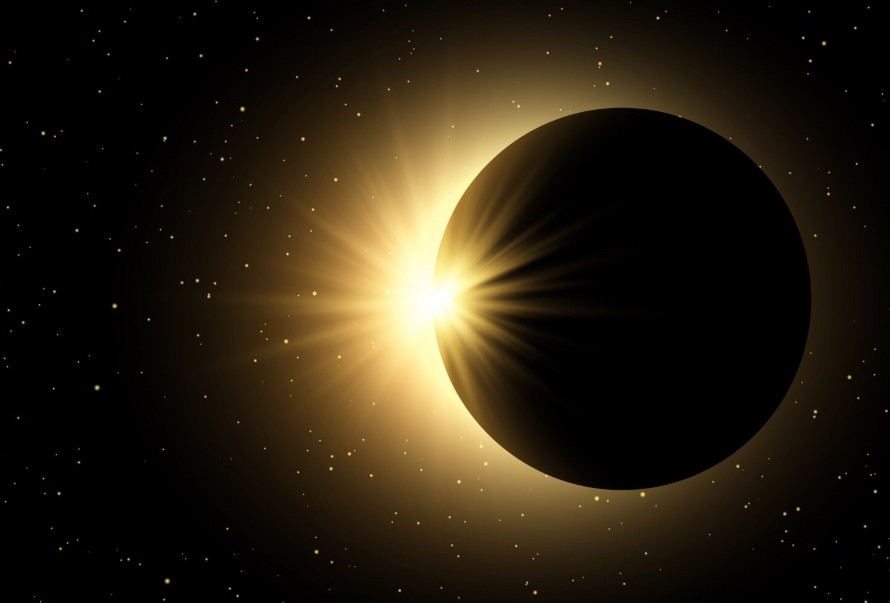
The year 2026 promises a spectacular celestial show with the solar eclipse 2026, offering two remarkable events an annular eclipse in February and a total solar eclipse in August. These eclipses present rare opportunities to witness nature’s cosmic alignment, from the glowing “Ring of Fire” to moments of daytime darkness during totality. Sky watchers, photographers, and astrology enthusiasts alike will find these events captivating. Understanding the dates, visibility zones, and safety precautions ensures that your eclipse experience is both awe-inspiring and safe, allowing you to fully appreciate one of the most extraordinary astronomical phenomena of the year.
What Is a Solar Eclipse?

When the Moon moves between the Earth and the Sun, it casts a shadow that partially or completely blocks the Sun’s light. This results in a solar eclipse, one of the most dramatic astronomical happenings you can observe. There are a few key types you should know:
- Total Solar Eclipse: The Moon fully covers the Sun, briefly dimming daylight and revealing the Sun’s outer atmosphere. This happens along a narrow track called the path of totality.
- Annular Eclipse: Here, the Moon doesn’t cover the Sun completely because it’s a bit farther from Earth. What remains visible is a glowing ring around the Moon — often called the ring of fire.
- Partial Eclipse: Only part of the Sun is obscured, creating a crescent shape.
You don’t need to be an astronomer to appreciate these phenomena — understanding them helps you plan where and when to view them safely.
Solar Eclipse 2026 Dates & Timings

The year 2026 will feature two spectacular solar eclipses, each offering unique experiences for sky watchers and astronomy enthusiasts. Understanding the type, date, and visibility of each eclipse will help you plan the perfect viewing experience.
| Date | Eclipse Type | Visibility |
| Feb 17, 2026 | Annular Solar Eclipse | Antarctica & partial in southern continents |
| Aug 12, 2026 | Total Solar Eclipse | Arctic, Greenland, Iceland, northern Spain |
1. Annular Solar Eclipse — February 17, 2026
On February 17, 2026, the first major eclipse of the year will be an annular solar eclipse, offering a chance to see the stunning “Ring of Fire” effect. This occurs because the Moon, although aligned between Earth and the Sun, is slightly farther from Earth and appears smaller, allowing a bright ring of sunlight to encircle its dark silhouette.
The eclipse visibility for this event is mostly limited to Antarctica and nearby ocean regions. Surrounding areas in southern Africa and South America will see a partial eclipse, where only part of the Sun is covered. Most of North America and Asia will not be able to see this eclipse directly.
2. Total Solar Eclipse — August 12, 2026
The second major event is a total solar eclipse on August 12, 2026. Along the path of totality, the Moon will completely cover the Sun for a brief moment, turning day into twilight as the Sun’s outer atmosphere becomes visible.
This total eclipse will be visible from parts of Greenland, Iceland, and northern Spain. Surrounding regions in Europe and northern Africa will experience a partial eclipse. Observers within the narrow shadow of totality will witness a dramatic change in light, creating a once-in-a-lifetime experience.
Path of Totality & Eclipse Visibility
The path of totality is where the most complete effects of a solar eclipse occur. For the total solar eclipse on August 12, 2026, this path runs across the Arctic, Greenland, Iceland, and northern Spain. Observers within this corridor will see the Moon fully block the Sun for a brief period, creating a dramatic display of nature. Outside the path, the Sun is only partially covered, which is still impressive but does not create total darkness.
Planning for weather is essential. Clear skies significantly improve your chances of uninterrupted viewing. Many viewers choose locations with historically clear weather or travel routes along the path of totality that cross open ocean regions.
Astrological and Cultural Significance
Across cultures, solar eclipses have inspired meaning far beyond science. In astrology, eclipses are often associated with transitions, prompting reflection on new beginnings, personal intentions, and energy shifts. Many people use eclipses as times to set goals or reflect, especially when significant zodiac signs are involved.
Traditionally, eclipses were seen as omens or messages from the skies. Today, they continue to bring communities together through scientific observation, cultural events, and worldwide viewing gatherings where people celebrate and observe together.
Eclipse Safety: How to Watch Without Harming Your Eyes
Looking directly at the Sun without proper protection can cause permanent eye damage. Always use certified eclipse glasses that meet safety standards when observing any phase of an eclipse. Regular sunglasses are not sufficient. Indirect methods, such as pinhole projectors or viewing the Sun’s reflection, are safe alternatives.
If using cameras, binoculars, or telescopes, ensure proper solar filters are installed. Direct sunlight can damage both eyes and equipment. Even during the few minutes of totality in a total solar eclipse, eye protection remains essential before and after total coverage.
Conclusion
The solar eclipse 2026 offers two rare and breathtaking events an annular eclipse with its “Ring of Fire” and a total solar eclipse where day briefly turns to night. These celestial events combine scientific wonder with cultural and astrological significance, inviting everyone to look up and witness the connection between Earth, the Moon, and the Sun. Whether you travel to observe the eclipse or watch it online, 2026 promises unforgettable moments that will remain in memory for a lifetime.
Frequently Asked Questions (FAQs)
Q1. When is the next solar eclipse in 2026, and where can I see it?
There are two eclipses in 2026: an annular eclipse on February 17 and a total solar eclipse on August 12. Totality is visible in Antarctica, Greenland, Iceland, and northern Spain, with partial views in nearby regions.
Q2. What is the difference between a total and an annular solar eclipse?
A total eclipse completely covers the Sun, creating temporary darkness along the path of totality. An annular eclipse leaves a bright “Ring of Fire” because the Moon does not fully cover the Sun.
Q3. Can I watch the solar eclipse 2026 without special glasses?
No, looking directly at the Sun without certified eclipse glasses can cause permanent eye damage. Indirect viewing methods like pinhole projectors are safe alternatives.
Q4. How long will the total solar eclipse last in 2026?
The total eclipse on August 12, 2026, will last up to around 2 minutes and 18 seconds in the path of totality. Duration varies depending on your location along the path.
Q5. Will the solar eclipse 2026 be visible in India?
India is not in the path of totality or annularity. Only a very slight partial eclipse may be visible in some regions.


